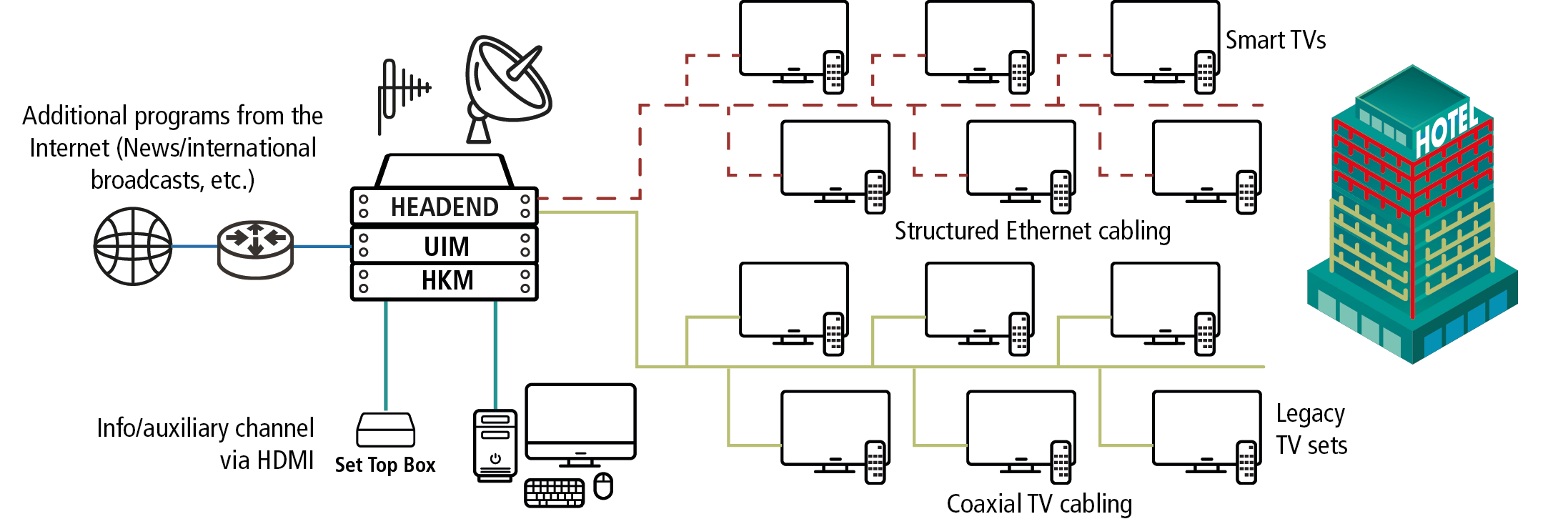
Hybrid Dual Headend
with simultaneous RF or IPTV output
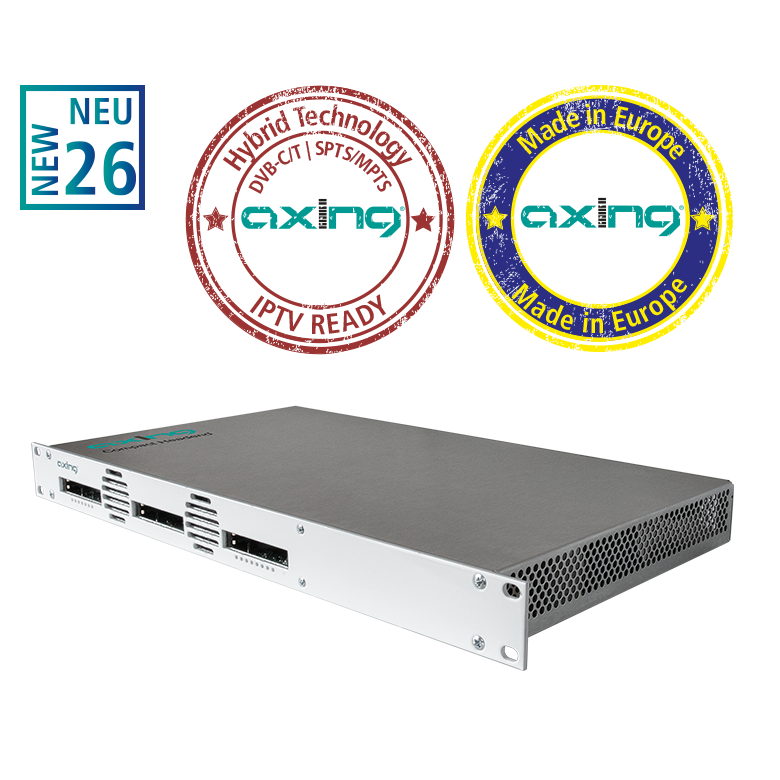
Benefits at a glance:
-
16 independent multi-tuner inputs (SAT / DVB Input to RF + IPTV)
-
Simultaneous RF and IPTV output
-
Hybrid DVB/IP architecture for gradual migration
-
Centralized remote management via SMARTPortal
-
SNMP support for professional monitoring
-
NIT editing and PID Filtering options
-
Flexible mounting (wall or 19”)


Step-by-step transition to IPTV:
The MK 16-00H hybrid headend enables hotels to make a smooth and risk-free transition from conventional DVB-C/T reception to modern IPTV technology. Thanks to its hybrid architecture, the system can continue to output traditional RF signals whilst simultaneously – once the relevant software extension has been activated – providing IPTV streams (SPTS/MPTS).
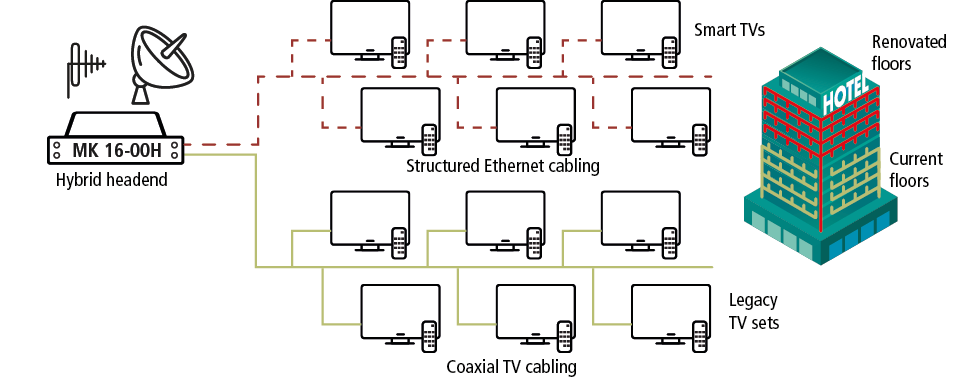
This allows new IPTV rooms or parts of the building to be connected gradually, without having to replace the existing TV infrastructure immediately.
Different buildings – different offers:
New buildings are now typically fitted with Ethernet – ideal for IPTV. In older buildings, the existing coaxial cable infrastructure can continue to be used without the need for costly refurbishment work to install network cables.
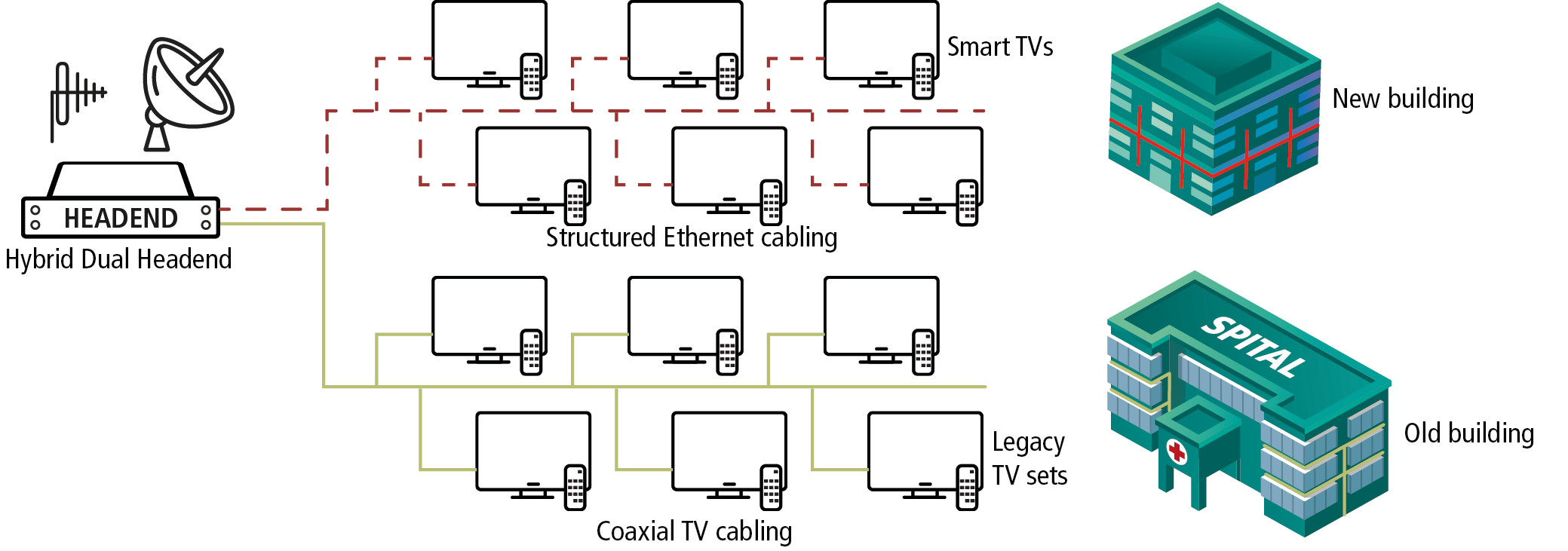
Many older buildings have cable routes that are difficult to access or are protected. The MK 16-00H enables a smooth transition, as only the newer parts of the building with network cabling need to be converted immediately, whilst the older parts can continue to use traditional DVB-C/T. Regardless of the building’s condition, all parts of the building receive the same programmes, as the headend can flexibly convert the signals into DVB-C/T or IP streams (SPTS/MPTS).
Different requirements for different groups of people:
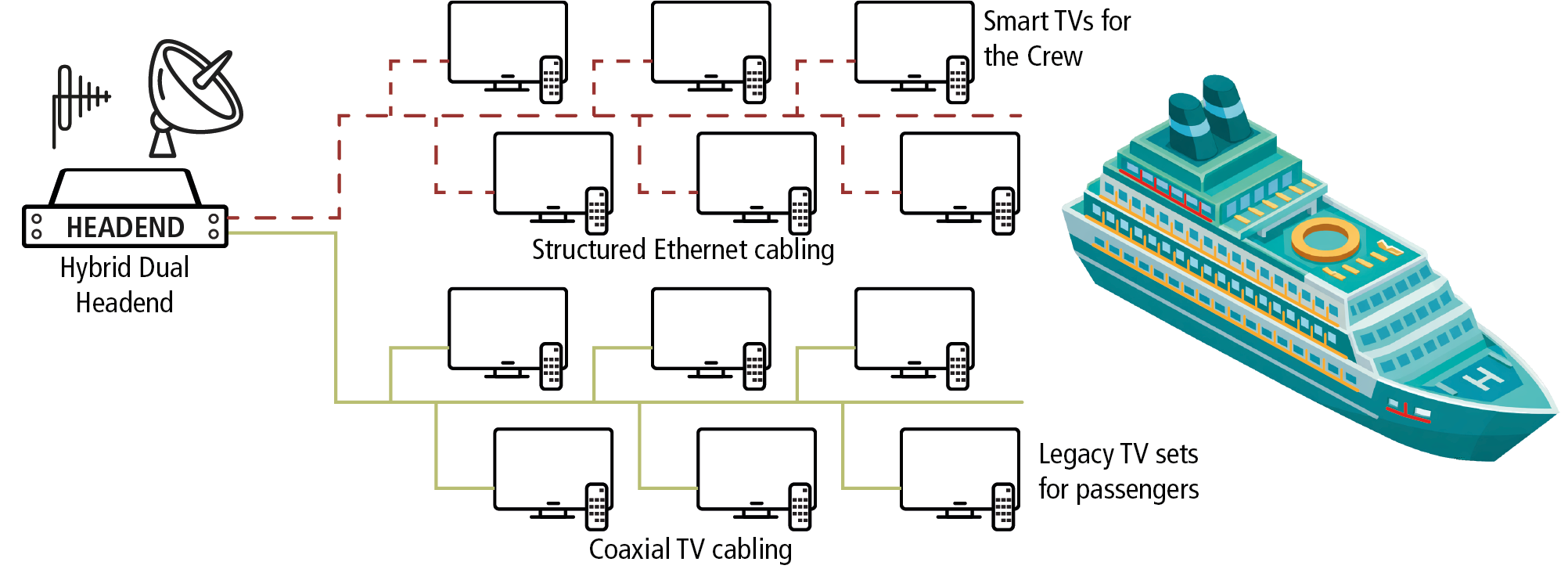
Use the hybrid dual headend to implement projects where the staff communication system runs over IP and guests have DVB-C reception. Cruise ships are a prime example of this.
Internet streams or local videos
In addition, programmes from internet streams (OTT, HLS, SRT) or local HDMI sources can be fed into the system via UIM and HKM, and can also be simultaneously delivered as DVB-C/T and IPTV streams (SPTS/MPTS).